- August 21,2026
- 1 month ago
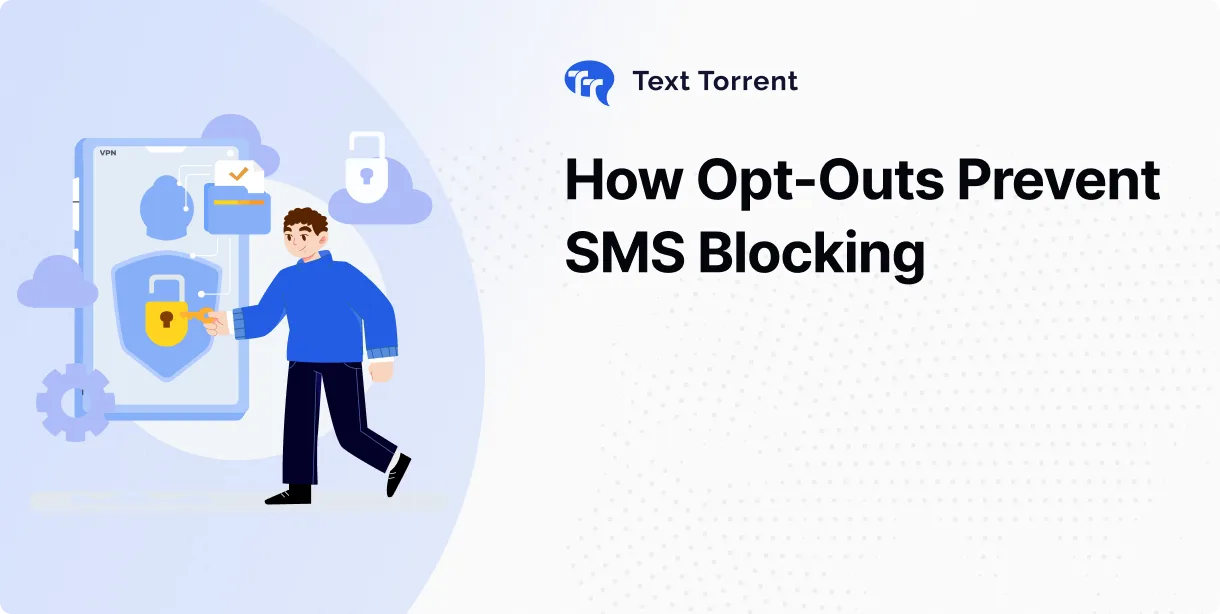
Proper opt-out handling prevents SMS blocking because carriers monitor complaint rates, opt-out processing speed, and suppression accuracy. If STOP requests are delayed, ignored, or mishandled, your complaint ratio rises and filtering follows.
In U.S. A2P messaging, opt-out management is not just a compliance checkbox. It is a core deliverability signal.
Below is how it works operationally.
These complaint signals are one of the core triggers behind the top reasons carriers block business SMS traffic.
Carriers and aggregators evaluate:
Spam complaint ratios
Opt-out ratios
Time-to-suppression after STOP
Re-messaging after opt-out
Under guidance from CTIA and enforcement authority of the Federal Communications Commission, businesses must honor opt-out requests immediately.
Filtering systems are designed to detect brands that do not.
What this means in practice:
If a subscriber texts “STOP” and receives another promotional message hours later, your campaign risk score increases instantly.
Carriers use both automated keyword detection and behavioral analytics.
When STOP, UNSUBSCRIBE, CANCEL, END, or QUIT are detected:
The number must be suppressed immediately.
A confirmation message may be sent (if applicable).
No future campaign traffic should hit that number.
If future messages are detected after opt-out:
Complaint likelihood rises
Carrier filtering confidence increases
Trust score degrades
For 10DLC campaigns registered through The Campaign Registry, poor opt-out handling can lead to throughput restrictions or campaign suspension.
Most of these failures come from missing safeguards that are covered in a proper bulk SMS compliance checklist for businesses.
1. Complaint Ratios Spike
Many users will not text STOP twice.
They report spam instead.
Carrier systems treat spam complaints as a severe signal. High complaint ratios are one of the fastest paths to filtering.
2. Trust Score Declines
Your trust score affects:
Daily volume limits
Per-second throughput
Filtering sensitivity
Repeated opt-out mishandling lowers your long-term deliverability ceiling.
3. Campaign Suspension Risk
If downstream carriers flag repeated violations, aggregators may suspend your campaign pending review.
Approval does not protect you from behavioral violations.
Delayed CRM Sync
Some teams rely on CRM updates that run hourly. If STOP processing depends on batch syncing, suppression is delayed.
Risk: Messages continue sending before the next sync cycle.
Fix: Suppression must occur at the messaging platform level immediately — not after CRM processing.
Partial Keyword Coverage
Supporting only “STOP” but not “UNSUBSCRIBE” or “CANCEL” creates gaps.
Carriers expect standard opt-out keyword coverage.
Minimum recommended keywords:
STOP
UNSUBSCRIBE
CANCEL
END
QUIT
Manual List Management
If suppression lists are manually maintained, human error becomes inevitable.
Automation is mandatory at scale.
Carriers monitor time-to-suppression.
If opt-out handling takes minutes or hours, users may:
Send repeated STOP messages
File complaints
Block your number
Automated systems should suppress numbers in real time — typically within seconds.
The faster suppression happens, the lower the complaint probability.
Higher message frequency increases opt-out events.
If suppression is slow or inconsistent, high-frequency campaigns amplify risk.
Example scenario:
50,000-message blast
2% opt-out rate
Suppression delay of 15 minutes
Thousands of post-STOP messages may be sent before processing completes.
That creates measurable carrier risk.
The Hidden Signal: Re-Messaging After Opt-Out
At this stage, many teams misinterpret delivery issues, even though the difference is clearly explained in bulk SMS blocking vs filtering explained.
Carriers look for repeat violations.
If a subscriber:
opts out
Receives another message
Files a complaint
The filtering confidence score escalates sharply.
This is often when brands experience sudden delivery drops — even if they were previously approved.
Compliance Requirements for Opt-Out Handling
Under industry guidelines:
Opt-out instructions must be clearly disclosed
STOP must immediately halt messaging
Confirmation messages must not contain promotional content
Opt-out records must be retained
Opt-out confirmations should be neutral and informational.
Example structure:
“You have successfully unsubscribed. No further messages will be sent.”
Avoid adding offers or promotional text in confirmations.
Practical Opt-Out Prevention Checklist
Before launching any bulk SMS campaign:
Are STOP keywords processed instantly?
Are suppression lists platform-level, not CRM-dependent?
Are all common opt-out keywords supported?
Is opt-out confirmation neutral and non-promotional?
Are opt-out logs stored for audit?
Are we monitoring opt-out rate trends per campaign?
If opt-out rates spike above historical averages, review content relevance immediately.
Why Strong Opt-Out Handling Improves Deliverability
Good opt-out systems:
Reduce spam complaints
Lower friction for disengaged users
Improve engagement quality
Maintain trust score stability
Reduce carrier scrutiny
Counterintuitively, making opt-out easy protects deliverability.
Forcing users to stay subscribed increases complaint probability and complaints trigger blocking faster than opt-outs.
Opt-Out Handling and Long-Term Reputation
Deliverability is reputation driven.
Consistent, accurate suppression:
Signals operational discipline
Demonstrates consent integrity
Maintains campaign trust score
Supports higher throughput tiers
Poor suppression signals negligence.
And carrier filtering systems are designed to detect negligence patterns over time.
Final Takeaway
Opt-out handling prevents SMS blocking because it controls the most important risk variable: complaints.
Every unprocessed STOP increases the probability of spam reports.
Every spam report increases filtering confidence.
SMS blocking is rarely random.
It is usually the result of unmanaged risk signals and opt-out handling is one of the strongest.
Fast, automated, platform-level suppression protects:
Deliverability
Trust score
Throughput limits
Regulatory compliance