- August 21,2026
- 2 months ago
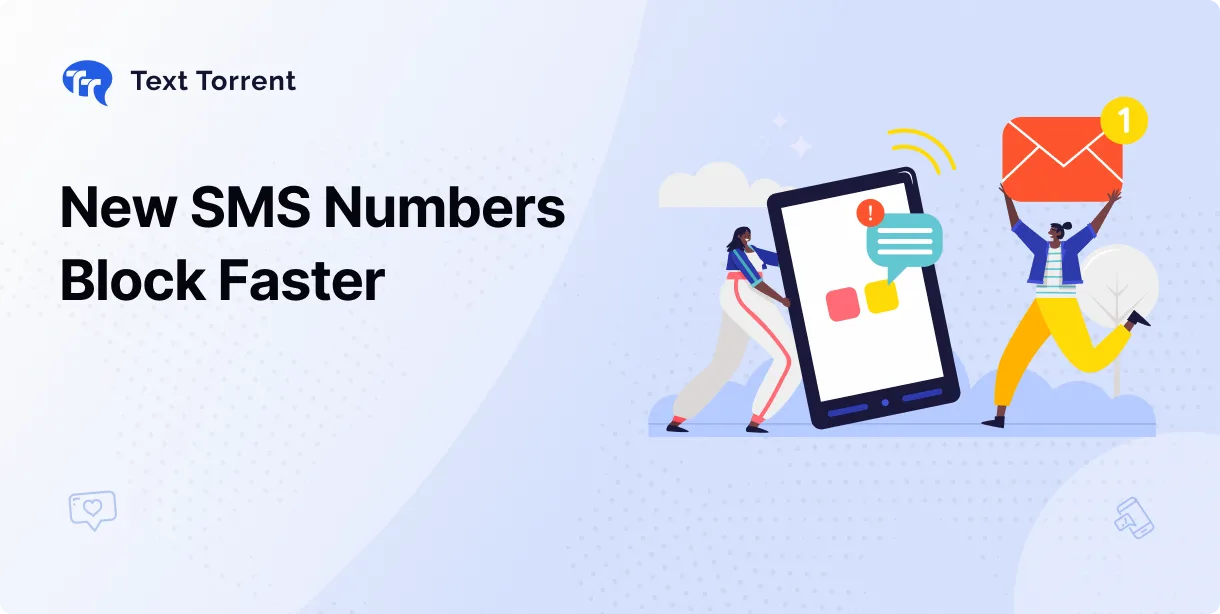
New SMS numbers get blocked faster because they have no established sending reputation, no engagement history, and no behavioral trust signals. Carriers treat new numbers as high-risk by default. If early traffic shows aggressive volume, poor targeting, or consent gaps, filtering escalates quickly and blocking can follow within days.
In A2P messaging, reputation is earned over time. New numbers start at zero.
Carrier filtering systems rely heavily on historical performance data:
Complaint ratios
Opt-out trends
Engagement signals
Traffic consistency
Domain alignment
A brand-new number has none of that.
Without historical behavior, carriers apply stricter scrutiny.
If your first traffic batch looks risky, the system has no positive signals to offset it.
New numbers don’t fail randomly — they fail because they lack historical trust signals. Carriers evaluate early behavior aggressively, and even small mistakes can trigger filtering. This becomes more dangerous when sudden traffic spikes are introduced, since high-volume sending patterns can amplify early-stage risk as explained in is High-Volume SMS Always Risky.
When you activate a new 10DLC number registered through The Campaign Registry, your brand may have a trust score — but the specific number does not yet have delivery history.
Carriers evaluate early traffic for:
Volume spikes
Use case alignment
Content risk patterns
URL consistency
Opt-out behavior
If your first campaign sends 50,000 messages within minutes, filtering systems treat that as burst risk — especially for a fresh number.
New numbers do not get the benefit of the doubt.
These systems don’t rely on a single rule. They continuously analyze sending behavior, engagement, and timing — which is why carriers detect automated messaging patterns based on behavior, not just volume, as broken down in How Carriers Detect Automated SMS Campaigns.
Email marketers understand IP warm-up. SMS teams often ignore number warm-up.
Common mistake:
Launching a large promotional blast immediately after provisioning a new number.
What carriers see:
No sending history
High volume
Promotional language
Shortened links
Unknown engagement patterns
That combination triggers early filtering.
Most blocking doesn’t happen instantly. It builds up gradually, and early warning signals usually appear before full suppression — which is why recognizing the early signs your bulk SMS is about to be blocked can give you a short window to correct course before escalation.
Even if your brand is properly registered with The Campaign Registry and compliant under guidelines from CTIA, live traffic determines filtering behavior.
Approval verifies registration accuracy.
It does not guarantee traffic quality.
New numbers must build positive engagement signals before pushing high volume.
On a mature number sending millions of messages monthly, a few complaints may not materially shift reputation.
On a new number with low baseline volume, even a small complaint cluster significantly affects risk scoring.
Example:
200 initial messages
4 spam complaints
2% complaint rate
That ratio is catastrophic in early-stage reputation modeling.
New numbers are statistically fragile.
Content Risk Amplifies the Problem
New numbers combined with:
Aggressive promotional language
Financial offers
Debt relief messaging
Urgency-heavy copy
Public short URLs
Increase scrutiny further.
Carrier filtering engines rely on pattern recognition.
New number + risky content pattern = higher probability of suppression.
To understand why this happens, you need to look deeper into how carrier filtering systems actually work, rather than treating blocking as random behavior — which is explained clearly in Carrier Blocking Rules Explained Simply.
Number Rotation Makes It Worse
Some businesses respond to filtering by switching numbers.
This resets reputation again.
Repeated number rotation signals evasive behavior to carrier systems.
Instead of fixing traffic behavior, teams multiply new-number risk exposure.
Reputation resets do not solve behavioral problems.
Why New Numbers Are Monitored More Aggressively
Carriers face constant spam attempts.
Spammers frequently:
Provision new numbers
Blast traffic quickly
Abandon numbers once filtered
Because of this pattern, carriers treat new numbers as statistically higher risk.
Legitimate businesses must overcome this baseline skepticism.
What Typically Causes New Numbers to Get Blocked
Immediate high-volume sending
No segmentation of inactive subscribers
Poor consent documentation
Promotional messaging under informational campaign registration
High-risk URLs
Opt-out processing delays
Sudden frequency escalation
Any of these alone can trigger filtering. Combined, they escalate quickly to blocking.
Practical Warm-Up Strategy
When activating a new SMS number:
Start with smaller, engaged audience segments
Avoid sending to cold or inactive subscribers
Spread traffic over time
Monitor complaint and opt-out ratios daily
Avoid risky link strategies
Confirm campaign use case alignment
Gradual scaling allows reputation signals to build positively.
Early Warning Signs of Reputation Risk
Watch for:
Carrier-specific delivery drops
Increased filtering codes
Slower throughput than assigned tier
Rising opt-out ratios
If these appear within days of launch, reduce traffic immediately.
Waiting often leads to blocking escalation.
Why Mature Numbers Survive Longer
Established numbers have:
Historical engagement data
Proven complaint stability
Domain consistency
Traffic predictability
Positive history creates resilience.
New numbers have none of that buffer.
Reputation maturity reduces filtering sensitivity.
The Core Principle
New SMS numbers get blocked faster because they lack historical trust signals.
Carrier systems rely on probability modeling.
New numbers resemble high-risk behavior statistically.
It is to launch them carefully.
The solution is not to avoid new numbers.
Final Takeaway
If you activate a new SMS number:
Do not blast immediately.
Do not send cold traffic first.
Do not rotate numbers to escape filtering.
Do not increase volume faster than engagement supports.
Reputation builds slowly and erodes quickly.
New numbers are not fragile because carriers are unfair.
They are fragile because carriers are cautious.
Treat new SMS numbers like new infrastructure — not disposable marketing tools