- August 21,2026
- 1 month ago
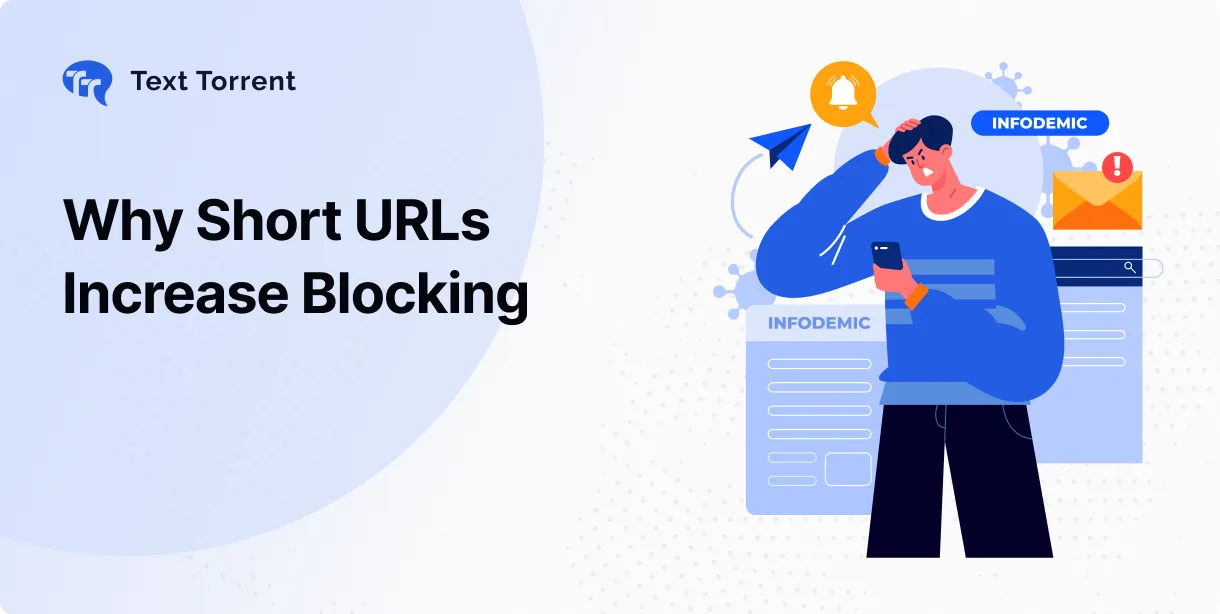
Short URLs increase SMS blocking risk because carriers treat them as high-risk indicators in spam detection systems. Public link shorteners are frequently abused by scammers, making them statistically associated with malicious traffic. When your SMS contains a generic short URL, filtering algorithms apply stricter scrutiny and, in many cases, preemptive blocking.
If you're running bulk SMS in the U.S., link strategy directly affects deliverability.
Below is how and why this happens.
Filtering systems evaluate:
Domain reputation
Domain age
Historical complaint rates
Malware associations
URL redirection patterns
Shortener service reputation
Public shorteners (like bit.ly or (tiny URL) are commonly used in phishing and scam campaigns. Because of this, they carry a higher baseline risk score.
Even compliant businesses can be filtered if their URL resembles high-risk patterns.
This type of analysis is part of the broader detection logic described in how SMS spam filters work in the US.
Why Short URLs Trigger Suspicion
1. Obfuscation of Destination
Short URLs hide the final destination. Carriers cannot easily see:
Landing page content
Brand consistency
Alignment with campaign registration
This lack of transparency increases filtering probability.
Filtering systems prefer visible, branded domains that match your registered business.
2. Shared Reputation Risk
When you use a public shortener, you share infrastructure with thousands of other senders — including bad actors.
If that shortener domain accumulates spam complaints, your messages inherit that reputation risk.
You lose control over domain integrity.
3. Rapid Domain Rotation Patterns
Spam campaigns often rotate shortened links to evade detection.
If your traffic shows:
Frequent domain changes
Multiple shorteners
Randomized link patterns
Carrier systems may classify it as evasion behavior.
Because of this, short links frequently appear among the top reasons carriers block business SMS traffic.
For campaigns registered through The Campaign Registry, carriers compare:
Registered use case
Brand identity
Website domain
Live message traffic
If your registration lists example.com, but your SMS includes bit.ly/xyz123, filtering engines cannot confirm alignment.
This mismatch increases scrutiny.
Blocking does not always mean a visible error.
You may experience:
Partial delivery on specific carriers
Increased carrier filtering codes
Slower throughput
Silent message drops
Many teams misinterpret this as random carrier instability. In reality, link risk scoring is often the cause.
Many teams assume a full shutdown, but the early-stage behavior is better understood through bulk SMS blocking vs filtering explained.
The Trust Score Impact
Your brand trust score influences:
Throughput limits
Daily volume caps
Filtering sensitivity
If short URLs increase complaints or spam flags, your long-term trust tier may decline.
Lower trust means tighter carrier scrutiny.
Over time, these signals accumulate and influence how sender reputation affects SMS blocking.
Why Branded Domains Perform Better
Carriers evaluate domain consistency.
A branded domain:
Matches your registered website
Signals brand legitimacy
Allows reputation building over time
Reduces shared infrastructure risk
Instead of:
bit.ly/flash-sale
offers.yourbrand.com/sale
Use:
Consistency improves transparency.
Using Multiple Shorteners Across Campaigns
Switching between shorteners looks evasive.
Rotating Domains Frequently
New domains have no reputation history. Filtering systems treat new domains cautiously.
Embedding Multiple Short URLs in One Message
Each additional URL increases risk weight.
Using URL Shorteners to Hide Aggressive Offers
Carriers analyze surrounding language patterns. If urgency + short URL appears together, filtering risk rises sharply.
Does Using a Custom Short Domain Help?
Yes, if implemented correctly.
A custom short domain:
Is fully owned by your business
Builds individual reputation
Matches your brand identity
Avoids shared shortener abuse risk
However, you must:
Use consistent DNS configuration
Avoid frequent changes
Maintain clean content reputation
Even custom domains can be filtered if complaint rates rise.
Short URLs and Complaint Ratios
Users are more likely to mark a message as spam if:
The link looks unfamiliar
The domain appears random
The URL looks suspicious
Complaint ratios are one of the strongest filtering signals under guidelines from CTIA.
Higher complaints → higher filtering probability.
Short URLs increase suspicion → suspicion increases complaint likelihood.
Operational Checklist: Safer URL Strategy
Before sending bulk SMS, confirm:
The domain matches your registered brand
You are not using public shorteners
Domain age is stable
You are not rotating links frequently
Only one primary URL per message
Landing page content aligns with SMS promise
If you must shorten links, use a branded short domain tied directly to your business.
Why Blocking Often Happens Weeks Later
Many teams say:
“We’ve used short links for months without issue.”
Filtering is pattern-based. If complaint rates rise gradually, link scrutiny increases over time.
Blocking often occurs when:
Frequency increases
Engagement drops
URL usage remains constant
Complaint ratios cross carrier thresholds
Short URLs amplify that risk.
The Core Principle
Carrier filtering engines evaluate risk probability.
Short URLs:
Obscure transparency
Share bad reputation pools
Match common spam patterns
Even compliant campaigns can trigger filtering if their URL strategy resembles abusive traffic patterns.
Final Takeaway
Short URLs increase SMS blocking risk because they reduce transparency and inherit shared reputation risk.
Carriers prefer:
Branded domains
Consistent infrastructure
Clear alignment with campaign registration
Predictable traffic behavior
Deliverability is built on trust signals.
Your link strategy is one of the strongest trust signals in every SMS you send.