- August 21,2026
- 1 month ago
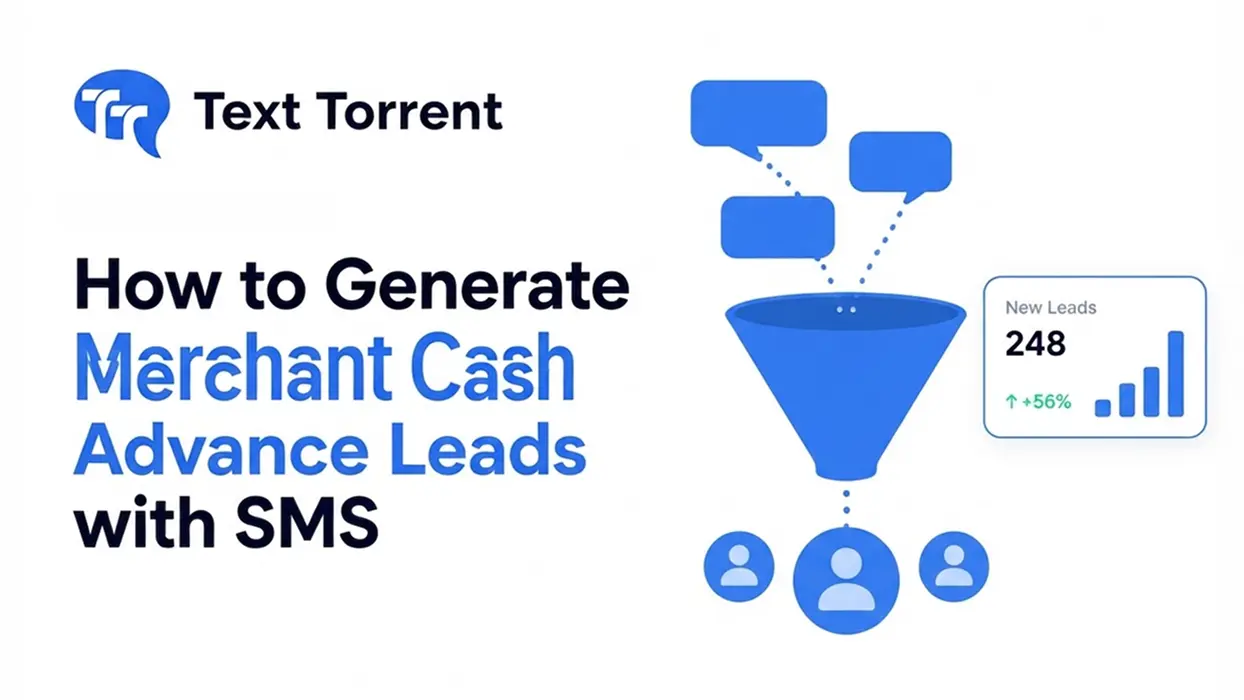
Merchant cash advance lead generation does not improve simply because a team sends more text messages.
SMS works when it shortens the distance between a business owner showing intent and a qualified sales conversation. It fails when companies upload purchased records, send generic funding offers, and assume a phone number equals permission to text.
That distinction matters in MCA. Prospects often submit several forms, receive outreach from multiple companies, and stop responding once the process becomes repetitive or unclear. Carriers also monitor financial messaging, complaint patterns, opt-outs, sender identity, and whether traffic matches the registered use case.
A productive SMS program must capture permission-based leads, respond while the request is fresh, qualify interest without creating friction, and route serious replies to a person quickly.
SMS is not a substitute for demand generation. It does not turn unrelated contact data into a legitimate prospect list.
Its strongest role is converting existing intent into a conversation. That intent may come from a funding inquiry, website application, paid advertisement, referral partner, event, direct-mail campaign, or an existing merchant requesting information about additional capital.
Use SMS to capture, confirm, qualify, and advance demonstrated interest—not to manufacture consent after acquiring a list.
When this rule is ignored, outbound volume may rise temporarily, but response quality falls. Opt-outs and complaints increase, carriers may filter traffic, and representatives spend time handling confused or hostile replies. Attribution also becomes unreliable because genuine demand and accidental contact are mixed together.
The lead source determines the quality of every message sent afterward. Build consent and context into the acquisition path rather than trying to repair both later.
Website Funding Forms
A funding form should collect only the information needed to begin the conversation:
Name and business name
Mobile number and email address
Requested funding range
Time in business
Approximate monthly revenue
Preferred contact method
Place the SMS disclosure near the phone field. Identify the company, explain the messages the prospect may receive, state that consent is not a condition of purchase, and link to the relevant terms and privacy policy.
Do not hide the disclosure in a footer or preselect an unrelated consent box. Store the language shown, form version, timestamp, source URL, and submission identifier.
Click-to-Text Ads and Landing Pages
A click-to-text advertisement reduces friction because the prospect starts the conversation. The first reply should still identify the business and explain what happens next.
Build each campaign around one intent, such as checking basic eligibility, requesting a consultation, receiving an application link, asking about renewal options, or scheduling a call.
Avoid vague calls to action such as “Text us for money.” They attract low-intent responses and weaken the connection between the advertisement and the message flow.
Keywords, QR Codes, and Offline Campaigns
Keywords and QR codes work on direct mail, conference materials, referral cards, and industry publications. Each keyword should map to one source and one offer.
For example, CAPITAL might trigger a confirmation and ask whether the merchant wants to check eligibility or schedule a call. Do not use one keyword across every channel; source-level attribution disappears when all entries are combined.
Referral and Lead-Generation Partners
Partner leads require more scrutiny, not less. Before accepting one, confirm:
Which company was named in the disclosure
Whether SMS was specifically covered
The exact consent wording and placement
When and how the form was submitted
Whether evidence can be produced for that individual
Whether the messages match the original request
Whether the lead previously opted out
A federal appeals court vacated the FCC’s 2023 one-to-one-consent restriction in January 2025, but that decision is not blanket permission to text any shared lead. CTIA best practices still state that opt-in should apply to the specific sender and campaign and should not be transferred or assigned.
Before a contact enters an automated sequence, require a pass on each check:
Source: The lead came from a documented form, keyword, referral flow, or prior relationship.
Identity: The disclosure named your company or clearly covered the sender.
Purpose: The person agreed to the funding-related communication you plan to send.
Evidence: You can retrieve the consent record for the number.
Timing: The inquiry is recent enough that the message remains expected.
Suppression: The number is not on an internal opt-out or do-not-contact list.
Campaign fit: The content matches the approved A2P 10DLC use case.
Platform approval: Your provider permits MCA traffic.
Text Torrent classifies merchant cash advance and similar financing offers as restricted traffic requiring written pre-approval and strict compliance with applicable law, carrier rules, and platform requirements.
If one check fails, do not automatically text the lead. Route it for review or use another lawful contact method.
A reliable workflow has five stages.
1. Send an Immediate Contextual Confirmation
The first message should arrive soon after opt-in and make the source recognizable.
Hi Jordan, this is Maya from Northstar Capital. You requested information about business funding on our website. Are you looking for capital within the next 30 days? Reply YES or NO. Reply STOP to opt out.
The message names the sender, references the request, asks one question, and provides an exit.
Do not begin with an unsupported approval claim, a large dollar amount, or artificial urgency. “You are approved” creates mistrust when no underwriting has occurred.
2. Qualify With Two or Three Questions
Do not reproduce the application in text messages. Ask only what changes the next action:
Desired funding range
Approximate monthly revenue band
Time in business
Urgency
Preferred call time
Use selectable answers where useful:
What funding range are you considering?
A) Under $25K
B) $25K–$75K
C) Over $75K
Stop the automation when the person provides a free form reply or asks a question. Scheduled prompts sent during a live conversation create duplicate or contradictory communication.
3. Route Qualified Replies Immediately
A qualified reply should create a task, notify the assigned representative, and display the source and conversation history.
Set service-level rules:
High-intent reply: human response within five minutes during business hours
Scheduling request: immediate confirmation
Document question: route to the assigned processor
Uncertain reply: move to a low-frequency nurture path
Opt-out or complaint: suppress immediately
The FCC allows recipients to revoke consent through any reasonable method. Standard words such as STOP, QUIT, END, CANCEL, and UNSUBSCRIBE are expressly recognized, and reasonable requests must be honored within no more than ten business days. Operationally, suppress immediately, including natural-language requests such as “Please don’t contact me again.”
4. Move Sensitive Steps to a Secure Channel
SMS is useful for prompts and status updates, not for collecting sensitive financial information in an open conversation.
Use a secure application or document portal for bank statements, identification, tax records, account numbers, Social Security numbers, and other confidential material. Explain the requested action and link only to an approved destination.
5. Nurture Without Chasing
Segment non-converting leads by reason:
Funding needed later
Revenue currently below criteria
Waiting for another offer
Application started but incomplete
No response after the inquiry
Existing customer potentially eligible for renewal
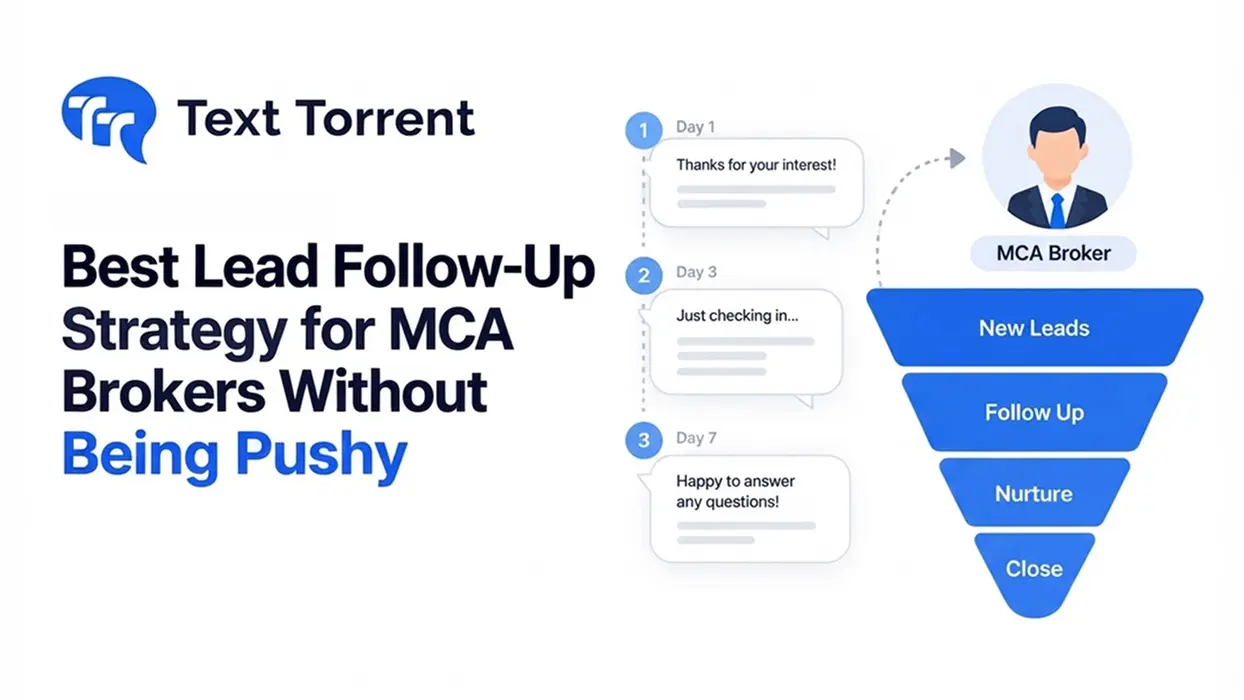
A restrained follow-up pattern could include an immediate confirmation, one reminder the next business day, and a final check-in several days later. Continued outreach should depend on the original permission, lead behavior, and counsel-approved policy.
More messages do not fix weak intent. They usually increase fatigue.
A2P 10DLC registration is not permission to send any content. It identifies the brand and declared campaign, while carriers still evaluate actual traffic.
The Campaign Registry requires information covering subscriber opt-in, opt-out processing, help handling, sample messages, and the call-to-action or message flow.
Keep delivery stable by following these controls:
Send only to documented opt-ins
Keep sender identity consistent
Match messages to the registered funding use case
Avoid misleading approval language
Use domains associated with the sending business
Remove invalid, reassigned, and opted-out numbers
Avoid sudden volume spikes unsupported by lead flow
Monitor delivery errors, opt-outs, complaints, and reply quality by source
Pause a source when complaint behavior changes sharply
Do not rotate numbers, rewrite messages, or spread traffic across accounts to bypass filtering. That treats a compliance signal as a technical obstacle and usually makes the underlying problem worse.
A business phone number is not proof of SMS consent. Shared, aged, or scraped lists often lack sender-specific evidence and current intent.
Optimizing for Replies Instead of Qualified Replies
“Still looking for capital?” may produce responses, but the team must measure whether those replies become eligible applications and funded deals.
Using the Same Sequence for Every Source
A website applicant, referral lead, renewal customer, and trade-show contact entered through different contexts. Their first message should reflect that context.
Letting Automation Compete with Sales
Pause the workflow when a representative takes ownership. Otherwise, the prospect may receive a qualification question after booking a call.
Treating STOP as the Only Opt-Out
People write “remove me,” “wrong person,” or “do not text.” The system and team should recognize and suppress these requests.
Sending Links Before Establishing Trust
An unexplained link in a financial message looks suspicious. Identify the company, reference the request, and explain what the link opens.
Measure the Funnel, Not Just Message Activity
Track performance from acquisition source to funded outcome:
Form-to-SMS opt-in rate
Delivery and first-response rate
Qualified-response rate
Median time from reply to human contact
Application-start and completion rate
Appointment-booking and show rate
Opt-out and complaint rate
Cost per qualified lead
Cost per completed application
Funded deals and volume attributed to SMS-assisted leads
Compare sources, message flows, response times, and handoff performance.
A campaign with a high reply rate but poor application completion may be attracting curiosity rather than qualified demand. A source with fewer replies but more funded deals may deserve more budget.
Practical Launch Checklist
Before launching, confirm that:
MCA messaging has platform approval
The brand and campaign are correctly registered
Every entry point contains reviewed SMS disclosure language
Consent evidence is stored and retrievable
Source tags pass into the CRM
The first message names the business and inquiry context
Qualification is limited to decision-changing questions
Human ownership and response-time rules are defined
Automation pauses when a person replies
Sensitive documents move through a secure portal
Opt-outs are recognized beyond exact keywords
Suppression applies across relevant systems
Delivery, replies, applications, and funded outcomes are measured together
Final Takeaway
Generating merchant cash advance leads with SMS is not a blasting exercise. It is a controlled conversion system built around documented intent.
The strongest programs start with a defensible acquisition source, send an immediate contextual reply, qualify with minimal friction, and move serious prospects to a human quickly. They treat consent records, opt-outs, carrier registration, source quality, and sales routing as core infrastructure rather than administrative details.
With those controls in place, SMS can help MCA teams turn more inquiries into real conversations while reducing the delays and follow-up gaps that cause viable opportunities to disappear.