- August 21,2026
- 1 month ago
Merchant cash advance sales teams rarely lose opportunities because they lack leads. They lose them because representatives cannot establish contact quickly enough, follow up consistently, or identify which prospects are ready for a conversation.
A typical merchant may submit several funding inquiries within a short period. By the time one broker calls, the prospect may already have ignored multiple unfamiliar numbers, spoken with another provider, or moved on to a different task.
This creates a practical question for MCA brokers:
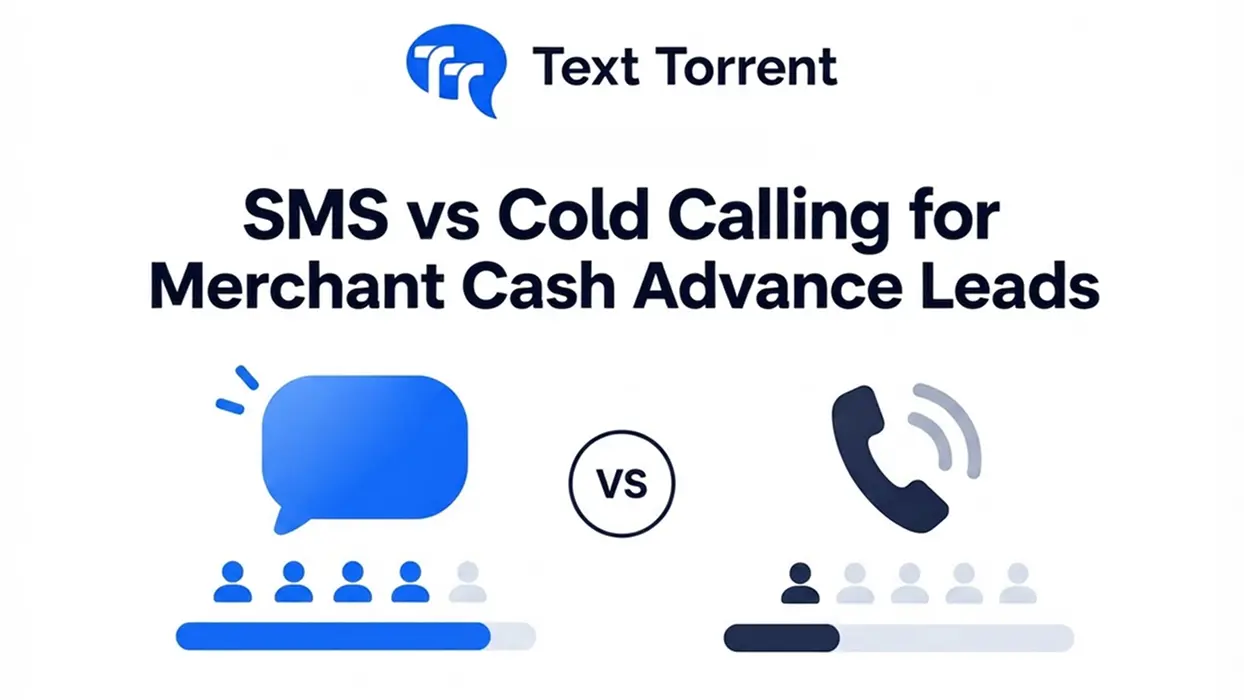
Should the first contact be an SMS message or a cold call?
Neither channel is universally better. SMS is usually more effective for opening a low-friction conversation, confirming interest, and scheduling contact. Calling is better when the prospect is engaged and the discussion requires qualification, explanation, or negotiation.
The strongest MCA outreach process does not replace phone calls with text messages. It uses each channel for the stage where it performs best.
The operational conclusion is straightforward:
Use SMS to earn the conversation. Use the call to conduct it.
Cold calling still has an important role in merchant cash advance sales. A live conversation allows a representative to assess revenue, time in business, funding purpose, urgency, existing positions, and documentation readiness.
The problem is not the call itself. The problem is using an unexpected call as the only way to establish contact.
Merchants receive calls from vendors, payment processors, lenders, brokers, insurance agents, and automated systems. An unknown number gives them no context about who is calling or why.
Even a legitimate call can appear suspicious when the merchant has submitted information to several websites or does not recognize the broker’s company name.
Repeatedly dialing without creating context rarely solves this problem. It can instead increase spam labeling, complaints, and resistance.
Representatives cannot maintain consistent call volume
Calling is labor-intensive. Every attempt requires time for dialing, ringing, voicemail, note-taking, disposition updates, and follow-up scheduling.
As lead volume increases, representatives commonly prioritize:
New leads over older opportunities
Prospects who previously answered
Larger estimated deal sizes
Leads with complete applications
Merchants who appear easier to reach
The remaining leads receive inconsistent follow-up. Some are called repeatedly on the first day and then abandoned. Others are never contacted after the initial attempt.
A successful connection may still happen at the wrong time
Answering a call does not mean the merchant is prepared to discuss financing. The owner may be serving customers, managing staff, driving, or handling daily operations.
The broker gets a live connection but not the merchant’s attention.
A brief text can solve this timing problem by allowing the prospect to respond when convenient or choose a specific calling window.
SMS reduces the amount of effort required from the prospect. A merchant can read a short message, understand why the broker is reaching out, and respond with a few words.
That does not automatically make every text campaign effective. SMS works when it is used as a controlled conversation channel rather than a high-volume blasting tool.
SMS provides context before the call
A short message can identify the sender, reference the merchant’s inquiry, and explain the next action.
For example:
Hi David, this is Mia from Northpoint Capital regarding the business funding request submitted today. Is now a good time for a quick call, or would later this afternoon work better? Reply STOP to opt out.
The merchant now knows:
Who is contacting them
Why they are being contacted
What the representative wants
How much time may be required
How to decline further texts
A call placed after this exchange is no longer completely unexpected.
SMS makes simple qualification easier
Not every question requires a phone conversation. Representatives can use two-way texting to confirm basic details before calling, provided the questions are appropriate for SMS and do not request sensitive documents or confidential financial information through an insecure workflow.
Useful preliminary questions may include:
Are you still exploring business funding?
What is the best time to call?
Is the requested amount still accurate?
Have you already accepted another offer?
Would you prefer to continue by phone or email?
This helps sales teams avoid spending call time on merchants who are unavailable, no longer interested, or outside the company’s funding criteria.
SMS creates a visible follow-up history
Calls often produce incomplete notes such as “no answer,” “left voicemail,” or “call later.”
Text conversations provide a written record of what was sent, when the merchant replied, whether the contact opted out, and which representative handled the conversation.
That history improves handoffs between sales representatives and reduces situations where multiple team members send conflicting messages to the same merchant.
MCA outreach should not treat compliance as a footer added after the campaign is built. Consent, lead source, sender identity, dialing technology, message content, and opt-out handling affect whether the outreach should occur at all.
This is especially important for purchased, shared, aged, or co-registration leads.
CTIA messaging guidance asks business senders to obtain consent before texting, preserve opt-in and opt-out records, provide clear opt-out instructions, and avoid using rented, sold, or shared opt-in lists. Failure to follow expected messaging practices can also increase the risk of carrier blocking.
Telephone rules are not identical to SMS rules. Most genuine business-to-business sales calls receive certain exemptions under the federal Telemarketing Sales Rule, but the FTC prohibits deceptive or misleading statements in B2B telemarketing and has expanded recordkeeping requirements. State laws and TCPA restrictions may create additional obligations depending on the number dialed and the technology used.
Do not assume that a business lead is automatically safe to text or call. A number presented as a business contact may be a personal mobile number. A merchant submitting information to one lead generator may not have clearly agreed to receive automated marketing from every broker that later purchases the record.
Before contacting MCA leads, verify:
The exact language shown when the number was collected
The company or companies named in the disclosure
Whether the prospect agreed to receive calls, texts, or both
Whether automated technology was disclosed
The date, time, URL, source, and form version associated with consent
Whether the number has opted out or appeared on an internal suppression list
Whether the campaign is permitted by the messaging provider
TextTorrent’s acceptable-use policy, for example, requires merchant cash advance and similar financing campaigns to receive specific pre-approval and operate compliantly.
Legal counsel should review the final outreach process because federal rules, state requirements, lead-generation disclosures, and campaign facts can produce different obligations.
SMS can improve lead response operations, but aggressive execution quickly creates new problems.
Sending the same message to every lead
A newly submitted inquiry, a 30-day-old lead, and a previous applicant should not receive the same introduction.
When teams ignore lead context, merchants receive messages that feel inaccurate or misleading. This increases opt-outs and complaints while making legitimate outreach look like spam.
Segment leads by source, age, status, consent record, previous engagement, and assigned representative.
Starting with an aggressive funding claim
Messages such as “You are approved,” “Funds waiting,” or “Guaranteed approval” can create compliance, trust, and deliverability problems when the claim is not supported.
The first message should identify the sender and explain the reason for contact. It should not imply underwriting decisions that have not occurred.
Using excessive urgency
MCA messages frequently contain phrases such as “act now,” “final opportunity,” “instant approval,” and “money today.”
Urgency may be appropriate when it reflects a real deadline. Manufactured urgency makes the message resemble common financial spam and can reduce merchant trust.
Hiding the company identity
A representative’s first name is not enough. Merchants need to know the business behind the outreach.
Company identification also helps distinguish an expected follow-up from an unknown solicitation.
Continuing after an opt-out
An opt-out must be processed across the complete contact environment, not only within one campaign.
A common failure occurs when the number is suppressed from one representative’s list but remains active in another campaign, CRM workflow, imported spreadsheet, or subaccount.
Maintain a centralized suppression process and recognize normal-language requests such as “remove me,” “don’t text,” and “not interested in messages,” rather than relying only on an exact uppercase STOP response.
A practical workflow coordinates SMS and phone calls around lead intent.
Step 1: Validate the lead before outreach
Confirm that the record contains:
A usable contact name
A valid phone number
A documented source
Required consent evidence
Submission time
Funding request context
No previous opt-out
No duplicate active opportunity
Invalid and duplicated records waste representative capacity and increase the chance of repeated contact.
Step 2: Send a contextual first message
For a recent inbound lead, send a concise introduction promptly after submission.
The message should include:
Representative or team name
Company identity
Reference to the inquiry
One simple question
Opt-out language where required
Do not begin with a long list of product benefits. The objective is to confirm contact and establish permission for the next step.
Step 3: Call after engagement
When the merchant replies positively, move the conversation to a call while intent is active.
A response such as “Yes,” “Call me,” or “After 3” should create a task for the assigned representative. The lead should not return to a generic queue where another agent may contact it hours later.
Step 4: Use SMS for missed-call recovery
After an unanswered call, send a message that explains the attempt:
Hi Sarah, I just tried to reach you regarding your business funding inquiry. I can call again at 2:30 or 4:00. Which works better?
This is more useful than repeatedly calling without context.
Step 5: Stop automation when a human conversation begins
Automated sequences should pause when the merchant replies, schedules a call, submits documents, declines, or opts out.
Without these exit conditions, a prospect may receive a generic reminder while actively speaking with a representative. That signals poor coordination and can damage confidence during a financial transaction.
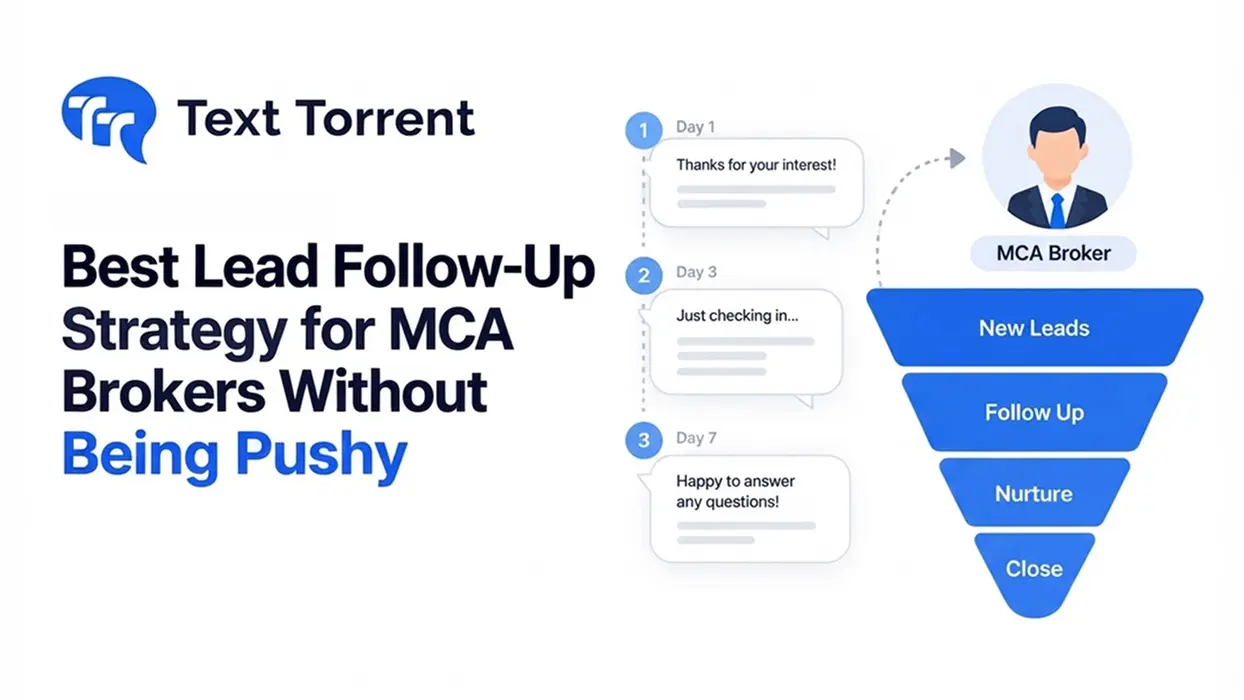
There is no universal cadence that fits every lead source. Frequency should reflect consent, recency, engagement, business hours, and internal risk policies.
A controlled example for a recent inbound lead may look like this:
Day 0: Send an immediate introductory text. Call after a positive reply or shortly afterward when the inquiry supports phone follow-up.
Day 1: Send one helpful follow-up that offers a specific next step, such as selecting a calling time.
Day 3: Ask whether the merchant is still evaluating funding or wants the inquiry closed.
Day 5–7: Send a final low-pressure message and stop the active sequence unless the merchant engages.
This is not a legal safe harbor. It is an operational framework. Your compliance team should determine whether each message is authorized and how long consent remains usable.
Do not compare SMS and calling using only raw response rates. Measure whether each channel advances qualified opportunities.
Track:
Time from lead submission to first attempt
SMS delivery and failure rates
Positive, negative, and opt-out reply rates
Call answer rate
Scheduled-call completion rate
Application completion rate
Document submission rate
Qualified opportunity rate
Offer rate
Funding rate
Complaints by source and campaign
Revenue and cost per funded deal
Review results by lead source. One campaign may generate inexpensive records but produce low contact rates, missing consent evidence, or excessive complaints. Another may cost more per lead but create better conversations and stronger funded-deal economics.
Use SMS first when:
The lead recently submitted an inquiry
The merchant may not recognize the number
You need to confirm availability
A previous call went unanswered
The next step is simple
The prospect requested text communication
Use a phone call when:
The merchant has confirmed interest
Qualification requires several connected questions
The offer, terms, or documentation needs explanation
The merchant raises objections
Multiple financing positions must be discussed
The conversation involves negotiation or closing
Do not use SMS to compress a complex funding conversation into a series of unclear fragments. Do not use calling to force a conversation before the merchant understands why you are contacting them.
For most MCA lead workflows, SMS is the better opening channel, while calling remains the better channel for qualification and closing.
SMS lowers the barrier to response, provides context, supports scheduling, and helps representatives follow up consistently. Cold calling provides the depth required to understand the merchant’s business, explain the process, address concerns, and move a qualified opportunity toward funding.
The deciding factor is not which channel produces the most activity. It is which sequence creates legitimate, compliant, and productive conversations.
A disciplined MCA team uses SMS to establish contact, calling to conduct substantive discussions, automation to prevent missed follow-ups, and clear stop conditions to avoid over-contacting merchants. That combination is more sustainable than relying entirely on text blasts or asking representatives to dial the same unresponsive leads repeatedly.