- July 26,2026
- 2 months ago
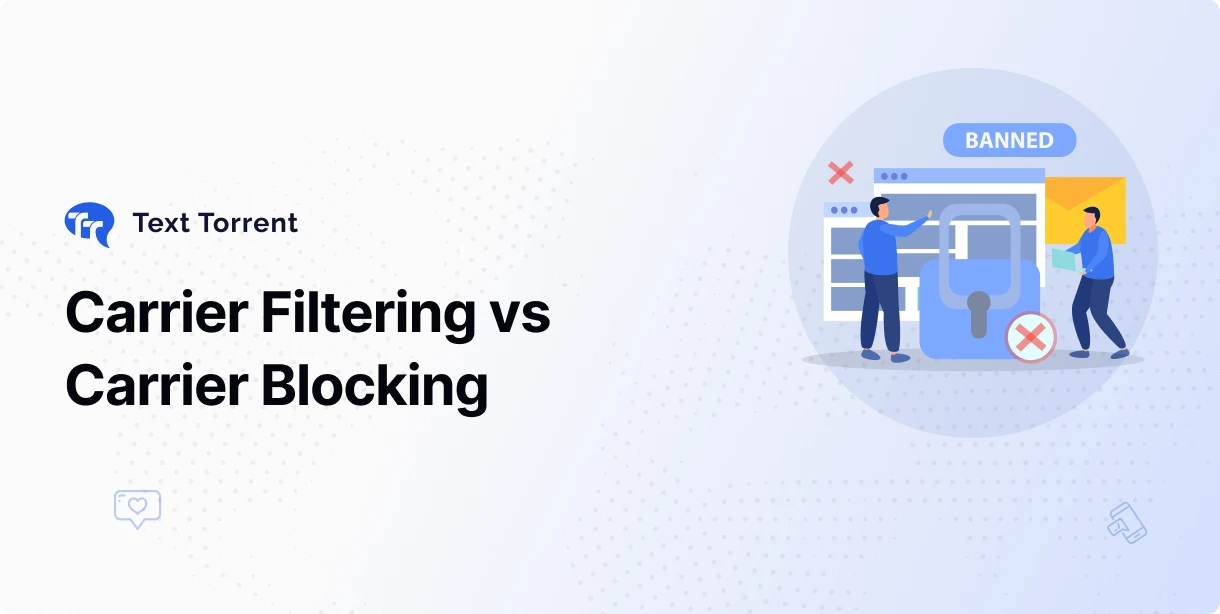
When SMS delivery problems occur, businesses often hear two terms used interchangeably: carrier filtering and carrier blocking.
Although they are related, they are not the same thing.
Understanding the difference matters because filtering and blocking represent different carrier actions, different levels of risk, different operational problems, and often require different solutions.
A business that studies the wrong issue can waste weeks changing messages, adjusting campaigns, or blaming its SMS provider. The real cause may still go unfixed.
For organizations that use SMS for marketing, customer messages, reminders, notifications, or lead generation, it is important to understand carrier filtering and blocking. This helps diagnose delivery problems accurately.
From a sender's perspective, both filtering and blocking produce a similar result:
Messages fail to reach recipients.
Because the outcome appears similar, many teams assume the underlying cause is also the same.
In reality, carriers use filtering and blocking differently.
Filtering is generally a risk-management mechanism.
Blocking is generally an enforcement mechanism.
Understanding that distinction helps explain why some delivery problems appear gradually while others occur almost immediately.
Carrier filtering occurs when carriers selectively restrict or suppress messaging traffic based on perceived risk.
Filtering is usually not absolute.
Instead, carriers evaluate traffic and determine which messages should proceed and which should be limited.
Filtering systems consider factors such as:
Sender reputation
Complaint history
Opt-out rates
Message patterns
Traffic behavior
Registration quality
Historical carrier trust
Filtering often operates dynamically.
The same sender may experience different outcomes across:
Carriers
Campaigns
Numbers
Message types
What Filtering Looks Like
Filtering often produces symptoms such as:
Gradual delivery declines
Inconsistent delivery performance
Carrier-specific delivery problems
Reduced engagement rates
Large gaps between accepted and delivered messages
Because some traffic still reaches recipients, filtering can be difficult to identify early.
Identifying these warning signs early gives businesses more time to reduce carrier filtering before partial delivery loss develops into a more serious disruption.
Carrier blocking is a stronger intervention.
Instead of selectively restricting traffic, carriers prevent messages from moving through their networks altogether.
Blocking is typically associated with higher-risk situations.
Common causes include:
Severe compliance violations
Fraud indicators
Unregistered messaging
Prohibited traffic categories
Extremely poor sender reputation
Repeated carrier policy violations
When blocking occurs, delivery failures are usually more obvious.
What Blocking Looks Like
Blocking often results in:
Immediate delivery failures
Widespread rejection of traffic
Significant delivery collapse
Near-zero delivery performance
Unlike filtering, blocking generally affects large portions of traffic rather than selected messages.
The easiest way to understand the distinction is through operational impact.
Factor | Carrier Filtering | Carrier Blocking |
|---|---|---|
Severity | Moderate | High |
Delivery Impact | Partial loss | Complete or near-complete loss |
Carrier Action | Risk management | Enforcement |
Visibility | Often difficult to detect | Usually obvious |
Recovery Time | Often shorter | Often longer |
Typical Cause | Elevated risk | Serious violation or trust failure |
Filtering generally indicates concern.
Blocking generally indicates intervention.
This difference is important because recovery strategies vary significantly.
Carriers rarely begin with blocking.
Because some readers may still ask what is SMS carrier filtering, it helps to view filtering as a selective risk-control process rather than an immediate shutdown of all traffic.
Most prefer progressive risk management.
Filtering allows carriers to:
Reduce potentially harmful traffic
Observe sender behavior
Evaluate future performance
Protect subscribers
If risk indicators continue increasing, carriers may escalate enforcement.
In many cases, blocking is preceded by a period of increased filtering.
This progression is why early filtering warnings should never be ignored.
Several operational issues frequently contribute to filtering.
Understanding why carriers filter business messages helps teams connect complaint growth, consent problems, traffic changes, and registration mismatches with declining delivery performance.
Complaints are among the strongest signals carriers receive.
Even modest increases can influence future filtering decisions.
Recipients who do not expect messages are more likely to complain.
Poor consent quality often contributes indirectly to filtering.
Large increases in traffic frequently trigger additional scrutiny.
Messaging behavior that differs from approved campaign registrations often creates trust concerns.
Carriers continuously evaluate sender reputation.
Declining reputation usually leads to increased filtering long before blocking occurs.
Common Causes of Carrier Blocking
Blocking is generally associated with more severe issues.
Unregistered business messaging traffic faces significantly higher blocking risk.
Phishing attempts, impersonation, and deceptive messaging frequently trigger blocking actions.
Repeated Compliance Failures
Persistent violations often result in stronger enforcement.
Long-term negative performance can eventually lead to blocking rather than filtering.
One of the most valuable troubleshooting steps is identifying whether delivery loss is caused by filtering or blocking.
Learning how SMS filtering works behind the scenes can help businesses interpret gradual declines, carrier-specific problems, and gaps between accepted and delivered messages.
Delivery rates decline gradually
Some messages still arrive
Performance varies by carrier
Certain campaigns underperform
Delivery remains inconsistent
Signs You Are Being Blocked
Delivery rates collapse suddenly
Entire campaigns fail
Traffic receives immediate rejection
Delivery approaches zero
Problems affect multiple campaigns simultaneously
The distinction often determines where investigations should begin.
What Businesses Often Get Wrong
Several mistakes appear repeatedly.
Reviewing common carrier-filtering triggers, can help teams identify risky practices before those issues contribute to stronger carrier enforcement.
Focusing Only on Message Content
Content matters, but filtering and blocking decisions involve much more than wording.
Carriers also evaluate:
Reputation
Consent quality
Registration accuracy
Traffic behavior
Historical performance
Ignoring Early Filtering Signals
Many businesses investigate only after delivery collapses.
Unfortunately, by that point carriers may have already escalated enforcement.
A message marked as sent does not confirm successful delivery.
Acceptance and delivery metrics provide much better visibility into potential carrier actions.
How to Reduce Both Filtering and Blocking Risk
The most effective approach is proactive.
Review campaign details regularly and update registrations when messaging behavior changes.
Protect Sender Reputation
Monitor:
Complaints
Opt-outs
Delivery trends
Engagement performance
Send only to recipients who clearly expect communication.
Avoid sudden volume increases, particularly with new numbers.
Small declines often indicate growing trust issues before blocking becomes a possibility.
Carrier Trust Maintenance Checklist
Review regularly:
Compliance
Registration information remains accurate
Campaign use cases remain consistent
Consent records are maintained
Complaint rates remain low
Opt-outs remain stable
Engagement remains healthy
New numbers are warmed gradually
Traffic growth is predictable
Volume spikes are controlled
Monitoring
Carrier-level reporting is reviewed
Acceptance rates are monitored
Delivery trends are tracked
Carrier filtering and carrier blocking are often grouped together, but they represent different stages of carrier risk management.
Filtering is generally a selective response to elevated risk. Some traffic continues to flow while carriers apply greater scrutiny. Blocking is typically a stronger enforcement action that prevents traffic from reaching recipients altogether.
Businesses that understand the difference can diagnose delivery issues more effectively, identify warning signs earlier, and take corrective action before delivery performance deteriorates further.
The most successful messaging programs treat filtering as an early warning system rather than a minor inconvenience. By keeping strong compliance, protecting sender reputation, monitoring carrier performance, and responding fast to delivery changes, businesses can reduce filtering and blocking over time.