- July 26,2026
- 2 months ago
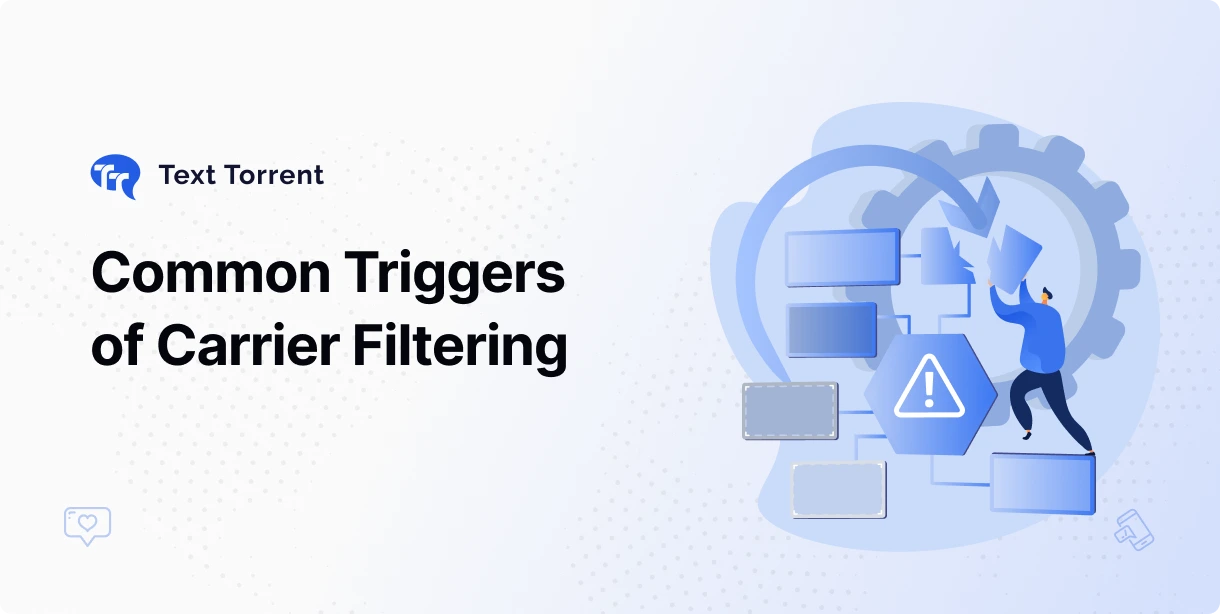
Many businesses discover SMS carrier filtering only after campaign performance starts declining.
Messages are being sent. The platform shows successful submission. Credits are being consumed. Yet delivery rates begin falling, replies slow down, and engagement drops without an obvious explanation.
In many cases, the root cause is carrier filtering.
Carrier filtering is one of the least understood parts of the business messaging ecosystem. Most companies know carriers block spam, but few know how filtering works. Few know what triggers it. Few know how it affects legitimate businesses.
For organizations that use SMS for marketing, it is important to understand carrier filtering.
This also applies to SMS used for customer updates.
It applies to appointment reminders, too.
It also matters for lead generation and alerts. This helps maintain reliable delivery rates.
SMS carrier filtering is the process mobile carriers use to evaluate business messages before delivering them to subscribers.
Carriers analyze incoming traffic and determine whether messages should:
Be delivered normally
Be delayed
Be rate-limited
Be filtered
Be blocked entirely
The primary goal is protecting subscribers from unwanted, fraudulent, or abusive messaging.
From the carrier's perspective, filtering is a network protection mechanism.
From a business perspective, filtering can become one of the largest causes of SMS deliverability problems.
The challenge is that filtering often happens behind the scenes. Businesses may never receive a clear explanation for why a message was blocked.
Many people assume filtering only occurs when messages contain obvious spam.
Modern carrier systems evaluate much more than message content.
Filtering decisions are often based on a combination of factors.
Businesses that understand this risk signals can take practical steps to reduce carrier filtering and build more reliable messaging programs.
Message Content
Content remains an important signal.
Carriers may evaluate:
Promotional language
Excessive urgency
Suspicious wording
Multiple links
URL shorteners
Repetitive campaign text
However, content alone rarely determines filtering outcomes.
Sender Reputation
Carriers build trust profiles for messaging programs over time.
Factors that influence reputation include:
Complaint rates
Opt-out activity
Historical delivery performance
Previous filtering incidents
Engagement patterns
A sender with poor reputation may experience filtering even when message content appears acceptable.
Registration and Compliance Data
In the United States, A2P 10DLC registration plays a significant role.
Carriers compare actual messaging behavior against registered campaign information.
Problems often occur when:
Business information is inaccurate
Use cases are unclear
Message volume differs significantly from expectations
Consent practices are inconsistent
Even legitimate businesses can encounter filtering if registration details no longer reflect real-world activity.
Understanding why carriers filter business messages can help teams identify whether the underlying issue involves registration, consent, sender behavior, or campaign content.
Sending Behavior
Traffic patterns are continuously monitored.
Risk signals may include:
Sudden volume spikes
High-volume traffic from new numbers
Irregular sending schedules
Large campaign launches immediately after number activation
These patterns often resemble behavior associated with spam operations.
A simplified SMS delivery process looks like this:
Business sends a message
SMS platform processes the request
Message is routed to carriers
Carrier filtering systems evaluate the traffic
Approved messages continue toward recipients
Delivery occurs
Filtering takes place before final delivery.
If a message fails the carrier's evaluation process, it may never reach the recipient. A closer look at how SMS filtering works behind the scenes can help businesses understand what happens between message submission and final delivery.
This is why businesses sometimes see a large difference between messages submitted and messages delivered.
Not all filtering operates the same way.
Content-Based Filtering
The carrier evaluates message text for patterns commonly associated with spam or abuse.
This type of filtering focuses heavily on the content itself.
Reputation-Based Filtering
The carrier evaluates the sender's historical behavior.
A strong reputation generally improves deliverability.
A damaged reputation increases filtering risk.
Volume-Based Filtering
Large or unexpected traffic increases may trigger additional scrutiny.
This commonly affects new messaging programs.
Compliance-Based Filtering
Registration data, consent practices, and campaign classifications are evaluated.
Programs that fail compliance checks often experience increased filtering.
Businesses should also understand the difference between carrier filtering and blocking, because reduced delivery and complete traffic rejection do not always indicate the same problem.
Carrier filtering is not always obvious.
Several warning signs frequently appear before businesses identify the problem.
Delivery Rates Begin Declining
One of the strongest indicators is a sudden drop in delivery performance without major changes to contact quality.
Engagement Falls Across Multiple Campaigns
When filtering increases, fewer recipients receive messages.
Lower delivery naturally produces fewer:
Clicks
Replies
Appointments
Conversions
New Numbers Perform Worse
Newly acquired numbers often face greater scrutiny than established senders.
Performance Varies by Carrier
If one carrier consistently delivers worse results than others, filtering should be investigated.
Many SMS deliverability problems are self-inflicted.
Reviewing the most common carrier-filtering triggers, can help businesses correct risky sending practices before delivery performance declines significantly.
Businesses often purchase new numbers and launch high-volume campaigns right away.
Carriers generally trust gradual growth more than sudden traffic surges.
Using Poor-Quality Contact Lists
Low-quality lists generate:
Complaints
Opt-outs
Negative engagement signals
These indicators can contribute to future filtering decisions.
Registration data that no longer matches actual messaging behavior creates trust issues.
Repeating Identical Messages
Sending the same content repeatedly at scale creates recognizable traffic patterns.
Even compliant campaigns can attract additional scrutiny when patterns become predictable.
Carrier filtering directly reduces the number of messages reaching recipients.
For example:
The gap between accepted and delivered messages may indicate filtering activity.
This reduction affects every downstream metric.
When delivery falls:
Fewer customers see offers
Fewer leads respond
Fewer appointments are booked
Marketing ROI declines
Many businesses focus on conversion optimization while ignoring the delivery layer that powers the entire campaign.
There is no guaranteed way to eliminate filtering.
However, businesses can significantly reduce risk.
Maintain Accurate Registration
Review campaign registration whenever messaging programs change.
Protect Sender Reputation
Monitor:
Complaints
Opt-outs
Delivery rates
Engagement trends
Warm New Numbers Gradually
Increase traffic progressively rather than immediately sending large volumes.
Maintain Strong Consent Practices
Send only to recipients who have clearly opted in.
Review Message Patterns
Look beyond compliance.
Consider how messages may appear from a carrier risk perspective.
SMS Carrier Filtering Prevention Checklist
Before launching campaigns, confirm:
Registration information is accurate
Consent records are documented
New numbers are properly warmed
Contact lists are regularly cleaned
Delivery rates are monitored
Carrier-specific reporting is reviewed
Complaint rates remain low
Message content is professionally written
Traffic growth remains gradual
Final Thoughts
SMS carrier filtering is a critical part of the modern messaging ecosystem. While it helps protect subscribers from spam and abuse, it can also create significant delivery challenges for legitimate businesses.
Filtering is rarely caused by a single factor. Content, sender reputation, registration quality, compliance practices, traffic patterns, and recipient behavior all contribute to carrier trust decisions.
Organizations that consistently achieve strong delivery rates understand this reality. They treat deliverability as an ongoing operational process, not a one-time technical setup.
Businesses that monitor their reputation often have fewer SMS delivery issues. They also stay compliant. They manage traffic responsibly. They review delivery trends early. They also get more reliable campaign results over time.