- July 26,2026
- 2 months ago

Most businesses know that carriers filter some SMS messages.
What many do not understand is how that filtering actually happens.
From the sender's perspective, a campaign may appear normal. Messages are submitted successfully. Credits are consumed. No obvious errors appear. Yet delivery rates drop, engagement declines, and some recipients never receive the messages.
The reason is that SMS filtering usually happens behind the scenes.
Carriers do not manually review millions of business messages every day. Instead, they operate automated filtering systems that evaluate traffic in real time. These systems continuously assess risk, trust, reputation, and compliance before deciding whether messages should reach subscribers.
Understanding how SMS filtering works helps businesses fix delivery issues faster and avoid common mistakes that cause filtering.
To understand filtering, it helps to understand the carrier's perspective.
Every day, carriers process enormous volumes of messaging traffic.
Within that traffic are:
Legitimate business messages
Customer notifications
Appointment reminders
Marketing campaigns
Spam
Fraud attempts
Phishing messages
Scam campaigns
Carriers are responsible for protecting subscribers from abusive messaging.
Without filtering systems, mobile networks would become overwhelmed with unwanted traffic.
The goal of filtering is not to block legitimate businesses.
The goal is to identify risk before messages reach customers.
Understanding the purpose of these systems helps businesses take practical steps to reduce carrier filtering while maintaining safer and more consistent messaging practices.
Many businesses assume filtering occurs after delivery.
In reality, filtering usually happens before the message reaches the recipient.
A simplified delivery path looks like this:
Business creates message
SMS platform receives request
Message enters carrier routing systems
Filtering systems evaluate the traffic
Risk assessment occurs
Message is approved, delayed, restricted, or filtered
Approved traffic reaches recipients
The filtering decision occurs before final delivery.
This is why a message can appear successfully sent while never reaching the customer's device.
Businesses asking what is SMS carrier filtering should understand that message submission and final delivery are separate stages, with carrier evaluation occurring between them.
The first stage involves identifying the traffic source.
Carriers evaluate information such as:
Sending number
Registered campaign
Brand information
Message type
Traffic volume
Historical sender behavior
At this stage, carriers begin building context around the message.
For example:
A newly registered business that sends 50 messages per day is handled differently.
A new sender that sends 50,000 messages all at once is handled differently.
The traffic itself may be identical.
The risk profile is not.
After identifying the sender, carriers evaluate reputation.
This is one of the most important filtering mechanisms.
Reputation is built over time through sender behavior.
Signals commonly evaluated include:
Complaint rates
Opt-out activity
Historical delivery performance
Prior filtering incidents
Traffic consistency
Recipient engagement patterns
Strong reputation generally improves delivery performance.
Poor reputation increases filtering risk.
To understand Why carrier filter business message traffic, teams must look beyond individual texts and examine reputation, complaint history, consent quality, and long-term sending behavior.
Many organizations focus entirely on message content.
In practice, reputation often has a greater impact on delivery outcomes than individual words inside a message.
Content analysis is the filtering stage most businesses recognize.
However, content evaluation is more sophisticated than searching for prohibited keywords.
Carriers may evaluate:
Promotional intensity
Message structure
Link usage
URL reputation
Repetition patterns
Language commonly associated with spam
A message does not need to contain forbidden language to trigger additional scrutiny.
Context matters.
A compliant message can still appear risky when combined with poor reputation signals.
Modern filtering systems evaluate how businesses send messages, not just what they send.
Behavioral indicators include:
Volume Spikes
Sudden increases in traffic often trigger additional review.
Predictable sending patterns generally create more trust than erratic activity.
New Number Activity
New numbers frequently face greater scrutiny because carriers have limited historical data available.
Campaign Growth
Rapid scaling can resemble spam operations even when messages are legitimate.
Behavioral analysis helps carriers distinguish normal business traffic from potentially abusive activity.
For U.S. business messaging, registration data has become a critical filtering signal.
Carriers compare traffic against registered information.
Areas commonly reviewed include:
Business identity
Campaign description
Message purpose
Consent methods
Expected messaging behavior
Problems often occur when registration information no longer reflects reality.
For example:
A campaign registered for customer notifications may later be used for promotional marketing.
Even though the business is legitimate, the mismatch increases filtering risk.
After evaluating multiple signals, carriers effectively create a risk profile.
Although exact carrier models are not public, filtering systems generally combine factors such as:
Reputation
Content
Registration quality
Complaint history
Volume patterns
Sender history
The resulting risk score influences delivery decisions.
Low-risk traffic typically proceeds normally.
Higher-risk traffic may experience:
Delays
Throughput restrictions
Increased filtering
Blocking actions
This process occurs automatically and often within milliseconds.
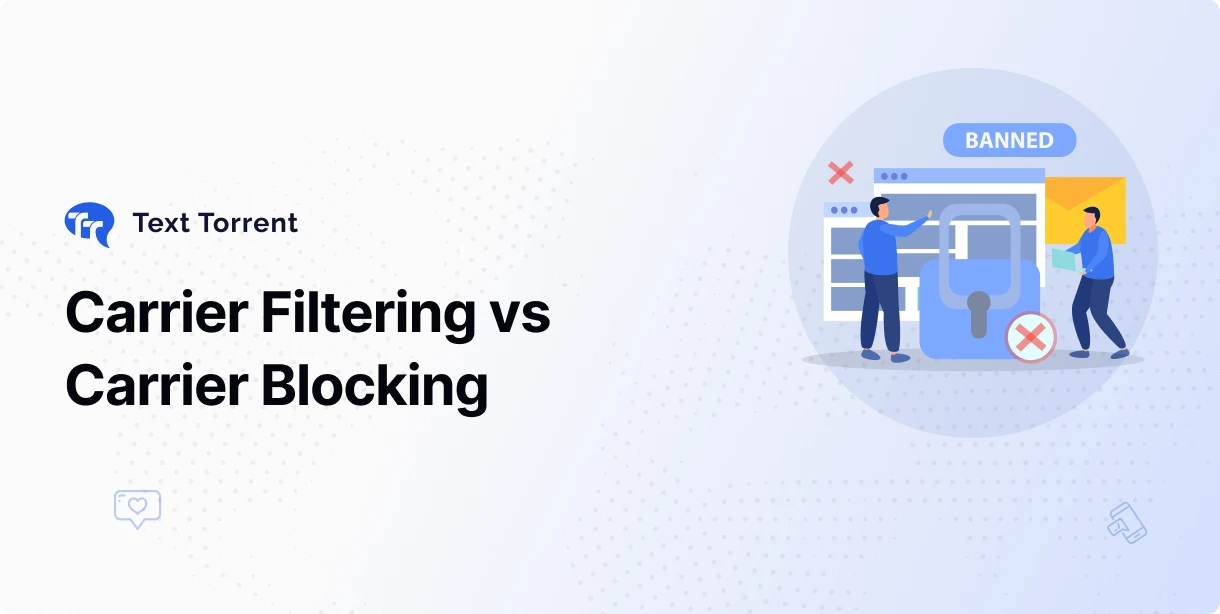
Understanding the difference between carrier filtering and blocking helps businesses determine whether carriers are selectively restricting messages or completely rejecting their traffic.
Why Some Messages Get Through While Others Don't
One of the most confusing aspects of filtering is inconsistency.
Businesses often ask:
"If my campaign is being filtered, why are some messages still delivered?"
The answer is that filtering is frequently selective.
Carriers may:
Deliver part of the campaign
Restrict specific traffic segments
Filter messages to certain carriers
Apply varying levels of scrutiny
This creates partial delivery scenarios that are often difficult to diagnose.
Many businesses incorrectly assume platform issues when filtering is the actual cause.
Several operational mistakes repeatedly contribute to filtering.
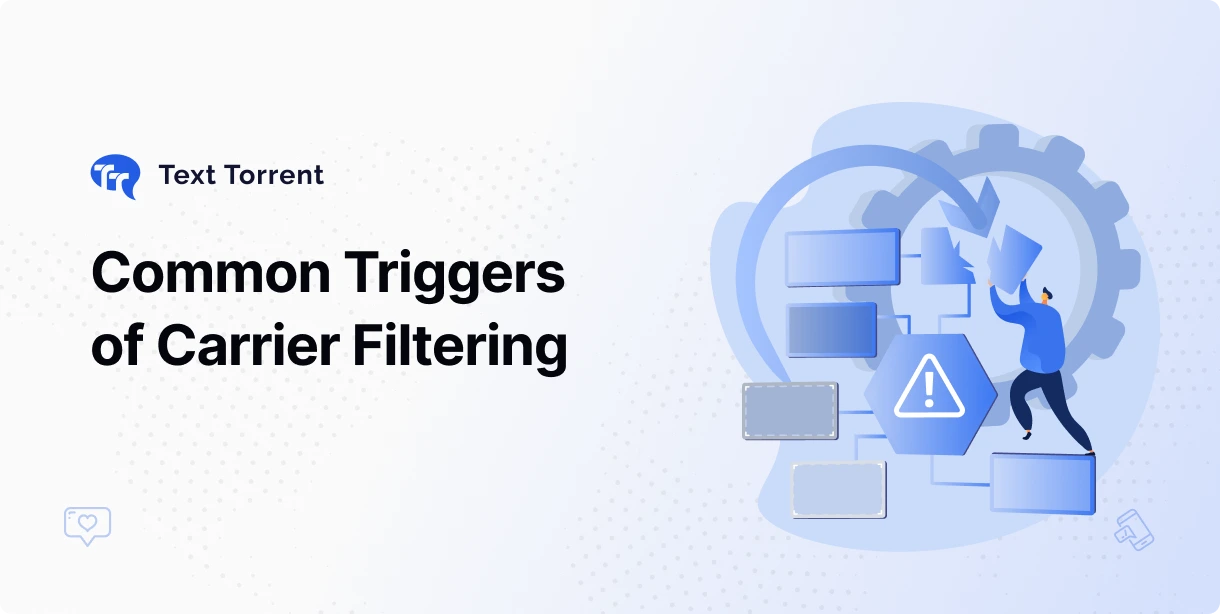
Reviewing common carrier-filtering triggers can help businesses identify risky sending patterns before they cause significant delivery declines.
Launching large campaigns immediately after obtaining new numbers increases risk.
Poor Consent Collection
Weak opt-in processes often lead to complaints.
Businesses frequently monitor delivery but ignore complaints and opt-outs.
Campaign registrations that no longer match actual use cases create trust problems.
Repetitive Messaging
Sending identical content repeatedly creates recognizable traffic patterns.
How Businesses Can Reduce Filtering
Filtering cannot be eliminated completely.
However, risk can be reduced substantially.
Review registration information whenever messaging programs change.
Protect Sender Reputation
Monitor:
Complaints
Opt-outs
Delivery performance
Engagement trends
Warm New Numbers
Increase volume gradually rather than immediately sending large campaigns.
Maintain Strong Consent Practices
Send only to recipients who have clearly agreed to receive messages.
Analyze Carrier-Level Performance
Carrier-specific reporting often reveals problems before overall delivery metrics decline.
Before launching campaigns:
Registration data is accurate
Consent records are documented
Contact lists are regularly cleaned
New numbers are warmed gradually
Delivery rates are monitored
Complaint rates remain low
Opt-outs are honored immediately
Traffic growth remains predictable
Message content aligns with campaign registration
SMS filtering works through a combination of reputation analysis, content evaluation, behavioral monitoring, registration verification, and automated risk scoring. No single factor determines whether a message is delivered.
This is why many businesses struggle to diagnose filtering problems. The issue is rarely one word, one campaign, or one technical setting. Instead, filtering reflects the overall level of trust carriers assign to a messaging program.
Organizations that consistently achieve strong delivery rates understand how these systems operate behind the scenes. They monitor reputation, maintain compliance, collect high-quality consent, scale responsibly, and investigate delivery trends early. Over time, these practices create stronger carrier trust and more reliable messaging performance.