- July 26,2026
- 2 months ago
Many businesses believe filtering decisions are based entirely on message content.
Modern carrier filtering systems evaluate far more than words inside a text message.
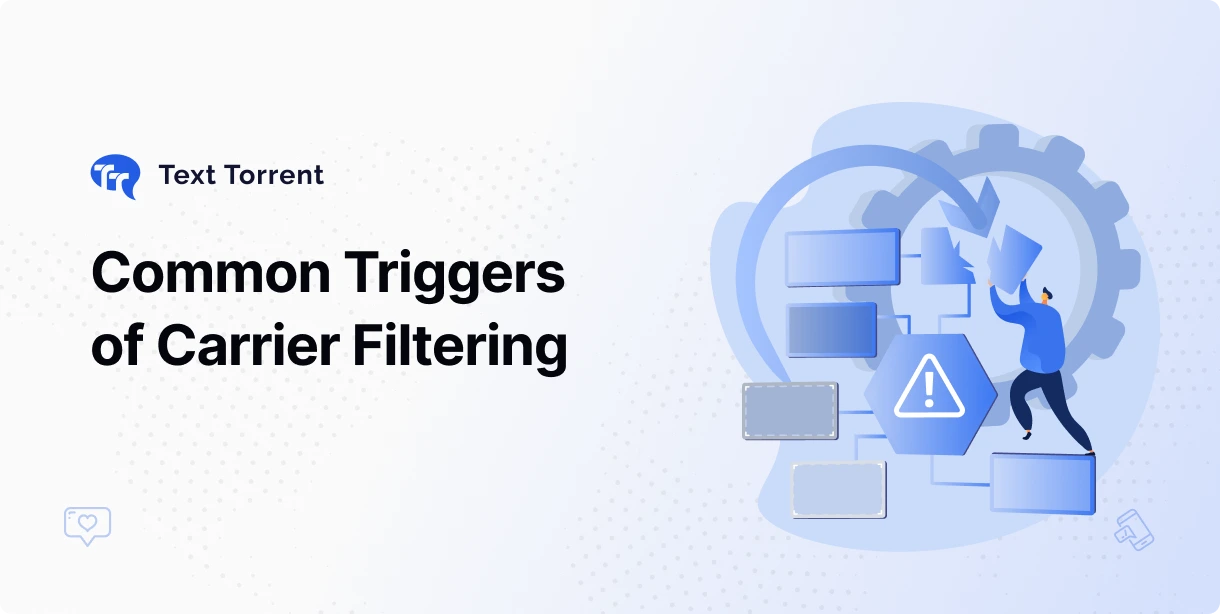
Filtering decisions are usually based on multiple categories of signals.
Message content remains an important factor.
Carriers may evaluate:
Excessive promotional language
Suspicious wording
Aggressive urgency
Multiple links
High-risk URL domains
Repetitive campaign text
However, content alone rarely explains most filtering events.
Two businesses can send nearly identical messages and receive very different delivery outcomes.
The difference often comes from other trust signals.
Sender Reputation Signals
Carriers continuously monitor sender behavior.
Over time, they develop trust profiles for messaging programs.
Factors that influence reputation include:
Complaint rates
Opt-out rates
Historical filtering incidents
Delivery consistency
Recipient engagement patterns
Businesses with stronger reputations generally experience fewer delivery disruptions.
Businesses with weaker reputations often face additional scrutiny.
Traffic Pattern Signals
Sending behavior is closely monitored.
Carriers look for unusual activity patterns that resemble spam operations.
Examples include:
Large volume spikes
Sudden traffic increases
New numbers sending high volumes immediately
Irregular sending schedules
Abrupt campaign growth
These patterns frequently appear in abusive messaging campaigns, making them important risk indicators.
One of the biggest misconceptions about SMS carrier filtering is that only bad actors experience filtering.
In practice, legitimate businesses are filtered every day.
The issue is usually not intent.
The issue is risk perception.
Carrier systems cannot evaluate business intent directly.
They evaluate observable behavior.
Understanding how carriers interpret sending behavior can help legitimate businesses reduce carrier filtering without relying only on message-content changes.
A legitimate company may unknowingly trigger the same signals associated with spam campaigns.
Example: Rapid Scaling
A business purchases a new number and immediately launches a 50,000-message campaign.
From the company's perspective, this is a normal marketing initiative.
From the carrier's perspective, the behavior resembles many historical spam campaigns.
Filtering becomes more likely even when the business is legitimate.
In the United States, registration has become one of the most important trust signals available to carriers.
Before evaluating registration and compliance signals, businesses should understand what SMS carrier filtering is and how it affects message delivery before a text reaches the recipient.
A2P 10DLC registration provides carriers with information about:
Business identity
Campaign purpose
Consent methods
Expected message types
This information helps carriers distinguish legitimate business traffic from suspicious activity.
However, registration approval alone does not eliminate filtering risk.
Problems often occur when:
Registration details are inaccurate
Business information changes
Messaging behavior differs from approved use cases
Consent practices are inconsistent
Carriers expect registration records and real-world behavior to remain aligned.
Recipient feedback is one of the strongest signals carriers receive.
Learning how SMS filtering works behind the scenes helps explain why complaint activity can influence the delivery of future campaigns, not just the message that generated the complaint.
When customers complain about messages, carriers interpret that feedback as evidence of unwanted communication.
Even small increases in complaints can influence future delivery performance.
Businesses often focus heavily on content while ignoring recipient reactions.
In reality, recipient behavior frequently has a larger long-term impact on filtering decisions.
Common Sources of Complaints
Many complaints originate from:
Poor-quality lead sources
Old contact databases
Incomplete opt-in processes
Unexpected marketing messages
Excessive messaging frequency
Reducing complaints often improves deliverability more effectively than rewriting message content.
Established messaging programs have historical performance data.
New numbers do not.
This creates a trust gap.
Without sufficient history, carriers have fewer signals available to evaluate legitimacy.
As a result, newly activated numbers often receive greater scrutiny.
Businesses frequently misunderstand this process and assume something is technically wrong when delivery rates are lower during early usage.
Operational Best Practice
Gradually increase volume on new numbers.
Allow positive reputation signals to accumulate before launching large campaigns.
Consistent growth typically performs better than immediate high-volume sending.
Several mistakes repeatedly contribute to filtering problems.
Reviewing common carrier-filtering triggers can help teams identify risky list practices, sending patterns, registration mismatches, and repetitive campaigns before delivery rates decline.
Treating Compliance as a One-Time Task
Registration approval does not guarantee long-term protection.
Compliance requires ongoing maintenance.
Poor-quality contacts generate complaints and opt-outs that damage reputation.
Many teams track messages submitted but fail to track messages delivered.
This makes filtering difficult to detect.
Businesses must also understand the difference between carrier filtering and blocking, because reduced delivery and complete message rejection may require different corrective actions.
Repeating Identical Campaigns
Large-scale repetitive messaging creates patterns that filtering systems can easily recognize.
Variation and relevance often reduce risk.
No business can completely eliminate filtering risk.
However, organizations can significantly reduce exposure.
Maintain Accurate Registration Data
Review registration information whenever business operations change.
Monitor:
Complaints
Opt-outs
Delivery rates
Engagement trends
Send messages only to recipients who have provided valid consent.
Avoid dramatic increases in traffic volume.
Different carriers may react differently to the same campaign.
Carrier-specific reporting often reveals issues earlier than aggregate reporting.
Before launching campaigns, verify:
Registration information is current
Consent records are documented
New numbers have been warmed appropriately
Contact lists are regularly cleaned
Complaint rates remain low
Delivery performance is monitored
Message content matches campaign registration
Traffic growth remains predictable
These practices do not guarantee delivery, but they substantially reduce avoidable filtering risks.
Final Thoughts
Carriers filter business messages because they are responsible for protecting mobile networks and subscribers from abuse. Filtering is not meant to target legitimate businesses. But legitimate businesses can still trigger filters. This can happen when their behavior looks like high-risk traffic.
Message content is only one part of the equation. Sender reputation, registration quality, complaint rates, consent practices, traffic patterns, and historical performance all contribute to carrier trust decisions.
Businesses that consistently achieve strong delivery rates understand this reality. They view deliverability as an ongoing operational responsibility rather than a technical setting. By maintaining compliance, protecting reputation, monitoring performance, and scaling responsibly, organizations can reduce filtering risk and create a more reliable messaging program over time.